
The global race for lithium is accelerating. As demand for electric vehicles, grid-scale batteries, and consumer electronics surges, mining operations are under enormous pressure to extract more lithium — faster, more efficiently, and with a shrinking environmental footprint. At the heart of that extraction process sits a critical piece of infrastructure that rarely makes headlines: the evaporation pond liner.
These liners — technically known as geomembranes — are the invisible foundation of brine-based lithium mining. They don’t look like much, but without them, the entire operation can seep away literally.
In this post, we break down how pond liners work, what materials are used, what features to look for in a demanding lithium mining environment, and why E Squared Technical Textiles’ Flex Liner LLDPE-R is increasingly the material of choice for serious operators.
Table of Contents
How Lithium Brine Extraction Actually Works
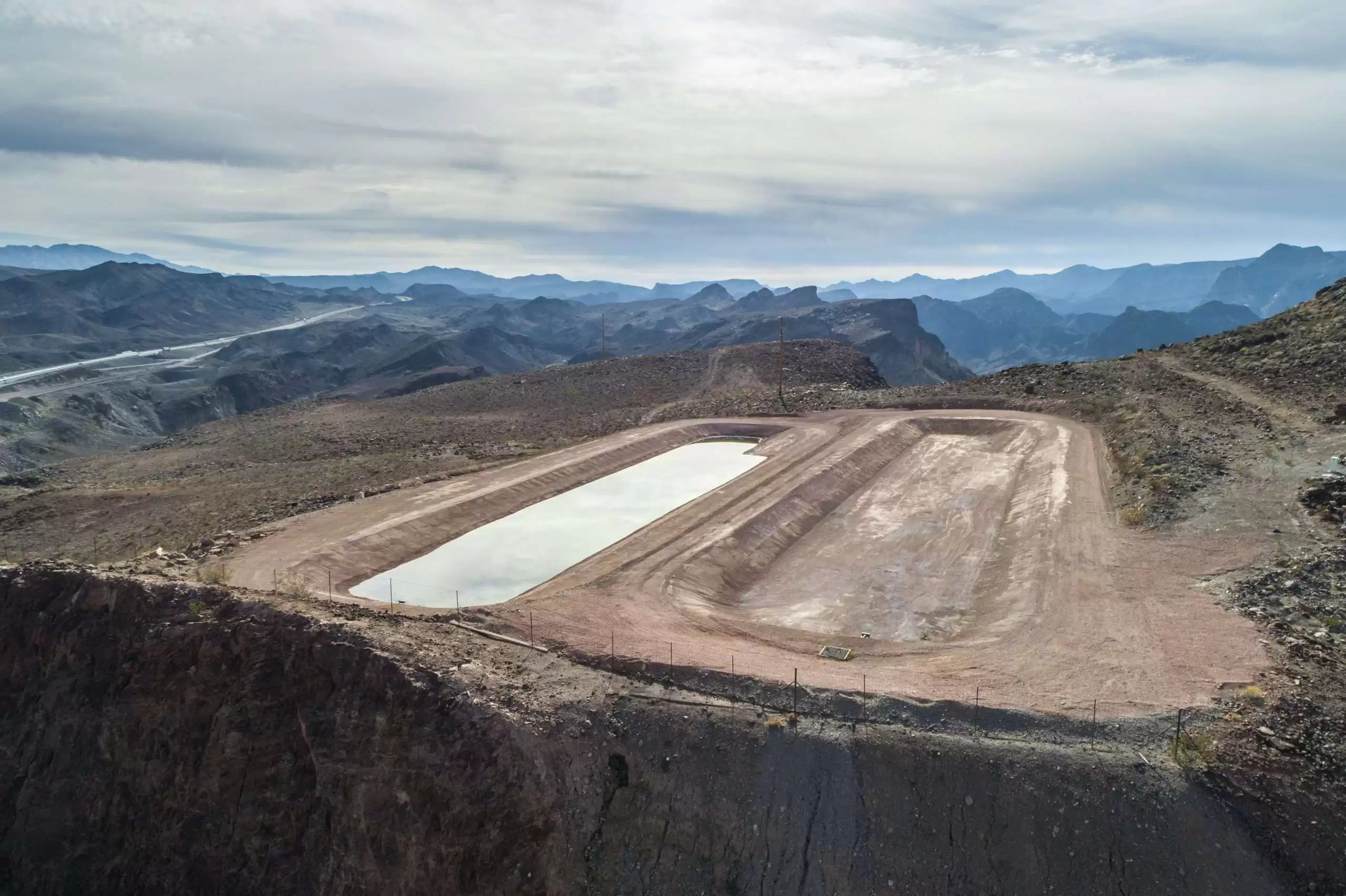
Most of the world’s lithium supply is extracted not from hard rock, but from vast underground brine deposits in salt flats — known as “salares” — primarily in the “Lithium Triangle” spanning Chile, Argentina, and Bolivia. Operators pump this lithium-rich brine to the surface and spread it across a series of large, shallow evaporation ponds that can stretch for hundreds of acres.
Over a period of months, the sun and wind do the heavy lifting: evaporating water from the brine and progressively concentrating the lithium content. The lithium-enriched solution is then further processed into lithium carbonate or lithium hydroxide for use in battery manufacturing.
It’s a relatively low-energy extraction method — but its efficiency depends almost entirely on pond containment. If the brine seeps into the subsoil, you lose product, contaminate groundwater, and invite regulatory penalties. That’s where the liner comes in.
What Pond Liners Actually Do
Geomembranes in lithium extraction serve three essential functions:
- Preventing Seepage: They act as an impermeable barrier to stop valuable lithium brine from leaking into the subsoil — protecting both your product and your project economics.
- Environmental Protection: They prevent toxic or highly saline mining byproducts from contaminating local groundwater, helping operators meet environmental compliance requirements.
- Process Efficiency: By eliminating downward water loss through soil, they ensure evaporation happens at a controlled, predictable rate — so your concentration curves stay on schedule.
In short: a failed or underperforming liner doesn’t just create a mess. It undermines the entire extraction timeline and economics of the project.
Common Liner Materials: What the Industry Uses
Modern lithium mines have largely moved away from traditional clay liners toward advanced geosynthetics — materials that are lighter, more durable, and up to 50% cheaper to install. Here’s how the main options compare:
High-Density Polyethylene (HDPE)
For years, HDPE has been the go-to industry standard. Its exceptional chemical resistance to corrosive salts, high tensile strength, and UV stability make it a reliable workhorse. However, HDPE’s relative rigidity can be a liability in sites with irregular subgrades or ground movement — stress cracking is a known failure mode.
Polyvinyl Chloride (PVC)
PVC is favored for its flexibility and “lay-flat” characteristics, allowing it to conform closely to the subgrade and reducing the risk of lateral flow if a leak occurs. It’s a strong option for complex geometries but can be more vulnerable to UV degradation over long outdoor exposure.
Linear Low-Density Polyethylene (LLDPE)
LLDPE steps in where higher flexibility is needed. When a pond site must adapt to subsurface movements or shifting ground, LLDPE’s greater elongation and conformability reduce the risk of puncture and tearing under stress.
Reinforced Polyethylene (RPE / LLDPE-R)
String-reinforced LLDPE composites are increasingly considered the optimal choice for lithium brine applications. By combining the chemical resistance and flexibility of LLDPE with an embedded reinforcement grid, these materials achieve higher puncture resistance, tear strength, and dimensional stability — without sacrificing the conformability that large-area installations demand.
Advanced Features to Look For in Mining Liners
Not all geomembranes are built the same. In the harsh conditions of desert mining operations — intense UV exposure, extreme temperature swings, highly concentrated brines, and remote installation environments — specialized performance features matter:
- Leak Detection Systems: Some liners are co-extruded with a conductive layer, allowing operators to use sensors or drone surveillance to identify punctures in real time. Early detection is far cheaper than remediation.
- Color-Coded Layers: White top layers reduce heat absorption during installation, while darker layers can absorb more solar energy to potentially accelerate evaporation rates — a meaningful operational advantage.
- Multi-Layer Composites: These configurations may include an underlayment — such as a nonwoven geotextile — to cushion the primary liner from sharp rocks and prevent punctures from hydrostatic pressure beneath the membrane.
- Temperature Resilience: In high-altitude mining regions, nighttime temperatures can drop well below freezing. A liner that becomes brittle in cold conditions is a liability. Materials that maintain elasticity across a wide temperature range are essential.
Recommended for Lithium Extraction Applications: E Squared Flex Liner LLDPE-R
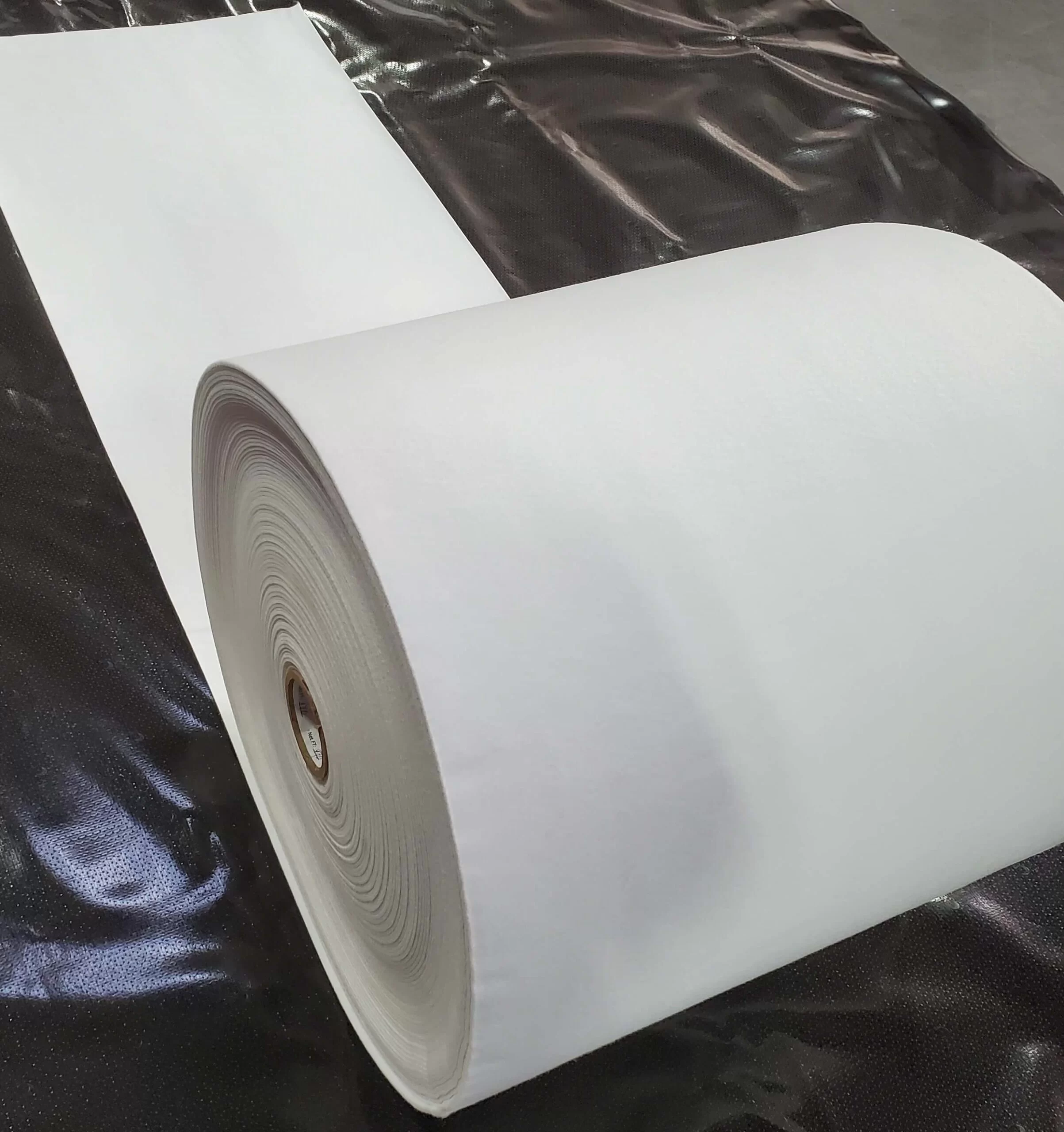
For demanding lithium extraction environments, E Squared Technical Textiles recommends the Flex Liner LLDPE-R — a string-reinforced linear low-density polyethylene composite specifically engineered to outperform standard unreinforced liners.
Here’s why it’s becoming the specification of choice for serious mining operators:
- Superior Flexibility & Lay-Flat Properties: Unlike rigid HDPE, LLDPE-R offers exceptional flexibility, allowing it to conform easily to irregular subgrades and complex pond geometries without the risk of stress cracking. This dramatically reduces installation time and field adjustment needs.
- Enhanced Durability: The string reinforcement provides high tensile strength and superior resistance to punctures and tears, making it robust enough to handle mechanical stress during installation and long-term operation in abrasive environments.
- Chemical & UV Stability: Formulated for high chemical resistance against concentrated lithium brines and engineered for long-term UV stability, the Flex Liner LLDPE-R is built to last in constant outdoor exposure without degradation.
- Efficient Installation: The material’s flexibility allows it to be prefabricated into large panels, welded, and tested under controlled factory conditions. This minimizes field seaming, accelerates construction timelines, and substantially lowers overall installation costs.
- Temperature Resilience: LLDPE-R maintains its structural integrity and elasticity even in freezing conditions, preventing the brittleness and cracking that can occur with other polymers during seasonal temperature fluctuations at high-altitude mining sites.
Product Specifications
- Thickness: Available in 30, 36, 45, and 60 mil options to match specific project containment requirements.
- Finishes: Offered in smooth or with a unique embossed textured finish for improved traction on slopes.
- Width: Standard widths up to 10 feet for efficient fabrication and panel sizing.
The Bottom Line
In lithium mining, the evaporation pond is where the product is made — and the liner is what makes the pond work. Specifying the wrong geomembrane is one of the costliest mistakes an operation can make. The right liner, properly installed, protects your resource, your environment, and your timeline.
The E Squared Flex Liner LLDPE-R was designed specifically for environments that put geomembranes to their toughest test. If your project involves concentrated brines, challenging subgrades, extreme temperatures, or remote installation logistics, it deserves a serious look.
Ready to learn more? Explore the Flex Liner LLDPE-R product page, or contact E Squared’s technical team to discuss specifications for your project.