

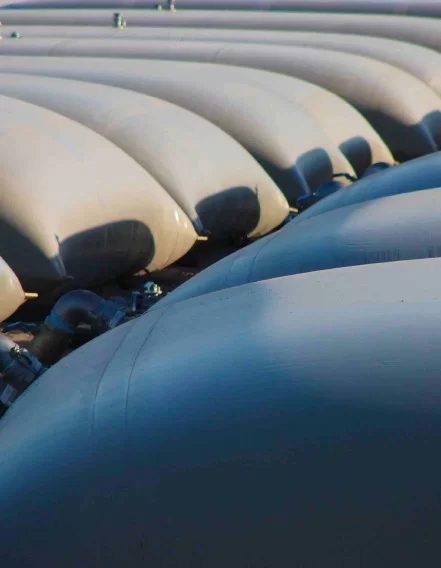
Benefits of Reinforced Coated Fabrics and Geomembranes in Biogas and Biodigester Applications

Reinforced geomembranes are becoming increasingly popular in the biogas and biodigester industry due to their effectiveness in containing gases and liquids, preventing leaks, and ensuring the durability of the systems. Biogas and biodigester applications involve the storage and processing of organic materials to produce biogas, a renewable energy source. The use of reinforced geomembranes plays a crucial role in maintaining the efficiency and safety of these systems.

One of the key advantages of using reinforced geomembranes in biogas and biodigester applications is their exceptional strength and durability. These membranes are typically made from high-quality materials such as EIA, TPU, LLDPE-R and PVC, which are designed to withstand the harsh conditions present in biogas and biodigester facilities. The reinforcement in these membranes, such as woven or non-woven geotextiles, enhances their tensile strength and tear resistance, making them highly reliable for long-term use.

In biogas and biodigester applications, containing gases and liquids is essential to prevent leaks and contamination of the surrounding environment. Reinforced geomembranes provide an impermeable barrier that effectively seals the storage and processing units, maintaining the integrity of the systems. This containment capability is crucial for ensuring the efficient production and storage of biogas, as well as the proper treatment of organic waste materials.

The chemical resistance of reinforced geomembranes is another important factor that makes them ideal for biogas and biodigester applications. These membranes are specifically engineered to resist corrosive substances, such as acids and gases, which are commonly found in biogas production facilities. By using reinforced geomembranes, operators can effectively protect the underlying soil and groundwater from potential contamination, ensuring environmental safety and compliance with regulatory standards.

Furthermore, the installation of reinforced geomembranes in biogas and biodigester systems is relatively straightforward, making them a cost-effective solution for containment and storage needs. These membranes can be customized to fit the specific dimensions of the storage units, minimizing material waste and installation time. Additionally, the long service life of reinforced geomembranes reduces the need for frequent maintenance and replacement, resulting in overall cost savings for facility operators.

In addition to their functional benefits, reinforced geomembranes also offer environmental advantages in biogas and biodigester applications. By preventing leaks and spills, these membranes help minimize the risk of soil and water contamination, preserving the surrounding ecosystem. The use of biogas as a renewable energy source further contributes to environmental sustainability by reducing greenhouse gas emissions and reliance on fossil fuels.

Overall, the use of reinforced geomembranes in biogas and biodigester applications represents a reliable and efficient solution for containing gases and liquids, maintaining system integrity, and ensuring environmental protection. As the biogas industry continues to expand globally, the demand for high-quality geomembrane solutions is expected to grow, driving innovation and advancements in this field. By utilizing reinforced geomembranes, biogas and biodigester facilities can optimize their operations, enhance safety standards, and contribute to a more sustainable future.

Contact E Squared to speak with an application specialist to learn more about our reinforced polymer product solutions for biogas collection and biodigesters, along with products for all your environmental applications.-R

Advancement of Polymer and Fabric Composites

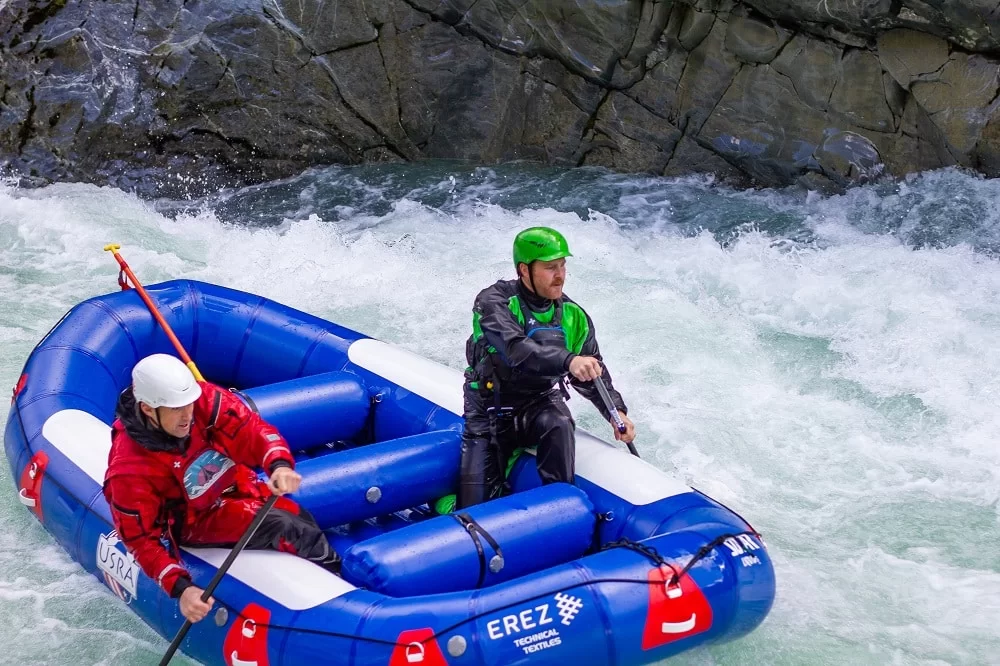
Flexible polymers and fabric composites are revolutionizing the way we think about materials and their applications. By combining the unique properties of flexible polymers, like PVC, LLDPE-R, EIA and TPU, with the strength and versatility of knit and woven fabric composites, engineers and designers are able to create innovative and functional products that are used in a wide range of industries, from aerospace and automotive to fashion and healthcare. One of the key advantages of  flexible polymers and fabric composites is their ability to be molded and shaped into complex forms. This makes them ideal for applications where traditional rigid materials would be impractical or too heavy. For example, in the aerospace industry, flexible polymers and fabric composites are being used to create lightweight and durable components for aircraft and spacecraft. By using these materials, engineers are able to reduce the overall weight of the vehicle, leading to improved fuel efficiency and performance. In the automotive industry,  flexible polymers and fabric composites are being used to create interior components that are both stylish and functional. These materials can be molded into unique shapes and designs, allowing designers to create custom interiors that are both visually appealing and comfortable for passengers. Additionally, the flexibility of these materials allows for improved impact resistance, making them ideal for use in safety features such as airbags and seat cushions. Our infrastructure is benefiting from the versatility of Geosynthetic composites combining geomembranes and high-performance fabrics in uses like below grade waterproofing, trenchless pipe rehabilitation (Cured In Place Pipe / CIPP), roadway construction and embankment stabilization. These products not only lower the cost of iinfrastructure, but extend the life of the installation. Noise abatement has benefited from composite technology in the form of reinforced polymer alloy product like Mass Loaded Vinyl (MLV) that are being used in applications ranging from interior wall construction, industrial equipment insulation, energy and mining along with building construction as a noise barrier to comply with local ordinances. These products are designed for long life,  generational, applications while also capable of re-use in temporary applications. In many cases these product can contain up to 75% of post industrial waste. In the recreational markets flexible polymers and fabric composites are being used to create innovative and sustainable devices like personal flotation devices and air containment applications like white water rafts and kayaks. By blending synthetic fabrics produces with nylon, polyester and aramids with flexible polymers, designers are able to create products that are durable and long-lasting. Additionally, these materials can be engineered to have specific properties, abrasion resistance or UV resistance, making them ideal for a wide array of recreational activities. Overall, the combination of flexible polymers and fabric composites opens up a world of possibilities for engineers, designers, and manufacturers. These materials offer a unique blend of flexibility, strength, and versatility that make them ideal for a wide range of applications across multiple industries. As new advancements in material science continue to emerge, we can expect E Squared to develop even more innovative and groundbreaking uses for flexible polymers and fabric composites in the years to come.

WHAT IS DOPE-DYED FABRIC?

Dope-dyed fabric is an innovative textile dyeing solution that offers exceptional colorfastness and durability. Unlike traditional fabric dyeing methods, where the dye is applied after the fabric is woven or knitted, dope -dyed yarn is colored during the manufacturing process of the yarn.

This means that the dye is added to the liquid polymer solution before it is extruded into fibers, resulting in a color that is integral to the fiber itself.

DEFINITION OF “DOPE”

Dope-dyed fabric, also known as solution-dyed fabric, is a type of textile material that undergoes coloration at the polymer level. The term “dope” refers to the chemical solution used in the dyeing process. By incorporating the dye into the liquid polymer solution, the color becomes an inherent part of the fiber, providing superior colorfastness and resistance to fading.

THE DYEING PROCESS DURING MANUFACTURING

The dope- dyed fabric manufacturing process involves several key steps. Initially, a precise amount of dye is mixed into the liquid polymer solution, creating a colored solution referred to as “dope.” This dope is then extruded through spinnerets to form continuous filaments, which are subsequently cooled and solidified to create fibers. These fibers are then processed further, such as by spinning or weaving, to create the final fabric product.

The advantage of dyeing at the polymer level is that the color is distributed evenly throughout the fiber, ensuring consistent and vibrant coloration. Unlike post-dyeing methods, where the dye sits on the surface of the fabric, dope-dyed fibers retain their color integrity even with extensive use, exposure to sunlight, or repeated washing.

DISTINCTION FROM CONVENTIONAL DYEING PROCESSES

The dope-dyeing process differs significantly from conventional fabric dyeing methods. In conventional processes, the fabric is typically woven or knitted first and then subjected to separate dyeing processes. This often involves immersing the fabric in large vats of water containing dyes, which requires larger water usage, intense chemical washing, and energy.

In contrast, dope-dyed fabric eliminates the need for post-dyeing processes by incorporating the dye into the fiber during the initial manufacturing stage. This innovative approach offers numerous advantages, including enhanced colorfastness, reduced water and chemical consumption, and a more sustainable manufacturing process.


ADVANTAGES OF DOPE-DYED FABRIC

dope-dyed fabric offers a range of advantages that make it a preferred choice for various industries. From superior colorfastness to environmental benefits, the following points highlight the key advantages of utilizing dope-dyed fabric:

1. CONSISTENT COLORATION

In conventional dyeing methods the fabric is dyed in batch production after weaving or knitting and often results in inconsistencies in color shades due to variations in dye absorption of different production lots.

dope-dyed fabric ensures consistent coloration throughout the material. In the dope-dyed method, the yarn is dyed before the weaving process, guaranteeing uniform color distribution along different lots.

This consistency in color enhances the overall aesthetic appeal of the fabric and provides manufacturers and consumers with reliable and predictable results. Whether it’s a large-scale production or a custom order, dope- dyed fabric ensures consistent and even coloration throughout the fabric.

2. SUPERIOR COLORFASTNESS AND RESISTANCE TO FADING

One of the primary advantages of dope-dyed fabric is its exceptional colorfastness. Since the color is an integral part of the fiber, it remains vibrant and resistant to fading even under harsh conditions. dope-dyed fabrics exhibit remarkable resistance to sunlight, washing, and exposure to chemicals, ensuring that the colors remain true and vibrant for extended periods. This makes them ideal for products that require long-lasting and fade-resistant color, such as outdoor furniture, automotive upholstery, and apparel.

3. LONG-LASTING DURABILITY IN VARIOUS ENVIRONMENTS

Dope-dyed fabric is renowned for its durability and strength. By incorporating the dye into the fiber during the manufacturing process, the color becomes an inherent part of the fabric, making it less prone to wear and fading. This inherent color stability contributes to the fabric’s overall durability, enabling it to withstand rigorous use, abrasion, and repeated washings without losing its color intensity. As a result, products made from dope-dyed fabric are known for their longevity, making them a cost-effective choice for manufacturers and end-users alike.

4. ENHANCED UV RESISTANCE AND WEATHER RESISTANCE

dope-dyed fabrics often exhibit excellent UV resistance. The colorfastness of these fabrics prevent color degradation caused by UV rays. Additionally, dope-dyed fabrics are typically designed to withstand adverse weather conditions, including rain, humidity, and temperature fluctuations. This makes them ideal for outdoor applications, such as diving buoyancy compensators, awnings, marine textiles, and outdoor gear, where protection against the elements is essential.

5. ENVIRONMENTAL BENEFITS AND SUSTAINABILITY

dope-dyed fabric offers significant environmental benefits and contributes to sustainability in the textile industry. By incorporating the dye into the fiber during the manufacturing process, dope-dyed fabrics reduce water consumption, as they eliminate the need for post-dyeing rinses. Additionally, the process requires fewer chemicals overall, resulting in reduced chemical usage and environmental impact. The energy requirements for dope dyeing are also lower compared to conventional dyeing methods. These eco-friendly practices help minimize the release of pollutants, conserve resources, and reduce the carbon footprint associated with textile production. As a result, dope-dyed fabrics provide a sustainable textile solution without compromising on quality or performance. Manufacturers and consumers can make a conscious choice by opting for dope-dyed fabrics, contributing to a greener and more sustainable future.


TEXTILE SOLUTIONS WITH E SQUARED

At E Squared Technical Textiles, we specialize in developing unique textile solutions for outdoor and extreme conditions. With a focus on innovation and advanced manufacturing capabilities, we lead the industry in providing high-performance fabrics that exceed client expectations. Our expertise in dope-dyed fabric enables us to deliver superior colorfastness, long-lasting durability, and resistance to fading. Furthermore, we are committed to sustainable practices, reducing water consumption, chemical usage, and energy requirements. Choose E Squared Technical Textiles for industry-leading solutions that combine performance, innovation, and sustainability. Explore our wide range of products and experience the difference for your textile needs today.

Ensuring Quality Control in Cured-in-Place (CIPP) Applications

Quality Control in Cured-in-Place (CIPP) Applications
D638 Tensile- UV-cured Fiberglass

Cured-in-Place (CIPP) has transformed the rehabilitation of underground pipelines through its innovative approach and cost-efficiencies. A high level of quality control is imperative to achieve a high standard of materials, structural performance and longevity of the rehabilitated pipelines in reference to industry standards such as ASTM F1216, ASTM F1743 and guidelines by NASSCO and the American Water Work Association.

As the manufacturer of E Squared Flexpipe™ coated felts for CIPP lateral and mainline applications, we would like to provide further insights on critical quality control criteria in the manufacturing of high-quality thermoplastic coated liners that are compatible with thermosetting resin systems.

High performance USA manufactured polyurethane (TPU) and polyolefin (TPO) resins are carefully selected to provide the required mechanical performance, chemical and abrasion resistance, hardness levels and thermal performance in the manufacturing of coated liners on a variety of fiber materials including non-woven and fiberglass in widths up to 116″. Coating thickness ranges between 5 and 25 mils on fiber materials, subject to liner application. 

Prior to production, the incoming resins are tested in the laboratory to evaluate properties such as melt flow/viscosity consistency, film quality and clarity to ensure a stable extrusion coating process.

During production, polymer coating thickness and weight density are monitored real-time using online gage measurement devices to ensureuniformity across the web and length of the liner. Manufacturing process with proper drying equipmentto eliminate excessive moisture content in TPU, precise extrusion die and extrusion processcontrols (temperature, pressure, torque and speed) is necessary to maintain a homogenous extrudate and effective saturation of molten polymer on fiber substrates for maximum coating adhesion. Maximum coating adhesion to the fiber substrate without pin holes is critical to prevent delamination and failure of TPU/TPO coating during the wet-out, inversion and/or liner installation process. Different extrusion techniques may be applied to different fiber substrates and coating polymer in order to achieve maximum coating adhesion and liner stability.

Quality Control in Cured-in-Place (CIPP) Applications
D2412 Parallel Plate Load
Control in Cured-in-Place
D2290 Split-Ring Tensile
Control in Cured-in-Place
D695 Compression

Image Courtesy of HTS Pipe Consultants, Inc.

The following table illustrates our in-process and final product inspection criteria which are carried out during/after manufacturing of coated liners (not limited to). Specimens/samples are taken across the web including the extreme edges on every roll of coated liner, unless specified. Destructive testing is also carried out to determine composite tensile strength and coating adhesion performance.

Inspection Criteria Inspection Criteria and Critical Control Points Description
Total composite thickness (coating on fiber material) Measurements across the web using a weighted micrometer (constant pressure) with a dial graduated to 0.001 inches (ASTM D5119). Microscopic evaluation of cross-section of composite is randomly performed to determine coating integrity and saturation on fiber materials. Compression level during extrusion is also monitored to ensure total composite thickness meets required thickness and maximum coating adhesion.
Total composite weight (coating on fiber material) Measurements across the web (ASTM D751) Includes testing of plain felt rolls before extrusion coating.
Finished width and length of liner Measured and recorded for everyroll on Customer’s Inspection Report.
Coating adhesion (heat weld) Destructive heat weld method (ASTM D413).
Coating adhesion (Styrene immersion +1hrs at room temp / 180F) Destructive testing where specimens are immersed in styrene +1 hour. TPU/TPO coating must remain intact on fiber materials.
Break strength and elongation (2in) Destructive testing to determine tensile load or force required to rupture materials (ASTM D461)
Dimensional stability Measures the change in dimensions (machine and cross machine directions) on exposure to static heat 100oC (ASTM D1204).
Hydrostatic resistance (Mullens) Measures the resistance to water penetration under pressure and provides pressure readings up to 1500 PSI (ASTM D751A). Test also validates integrity of TPU/TPO coating on fiber materials (no pin holes and light coating spots).
Coating gloss finish Measures the consistency of gloss at 60o angle (ASTM D523).
Coefficient of friction Measures the slip properties when sliding to itself or over another substance (ASTM D1894). Testing by manufacturing lot / polymer type.

E Squared also works closely with reputable resins suppliers in the USAto ensure E Squared TPU/TPO Flexpipe™ liners are compatible with thermosetting resin systems used in the industry. Application testing is performed to establish coating-resin compatibility and thermal resistance to withstand the initiation temperature and chemistry used in the curing of impregnated liners. It is also important that the initial CIPP structural requirements which includes flexural strength, flexural modulus and tensile modulus in reference to ASTM F1216 are met/exceeded for coated liners with impregnated resin system. Coating adhesion is tested using hot styrene at 180F and TPU/TPO coating must remain intact without defects, delamination and blistering.

In conclusion, the art of manufacturing high quality coated felt liners requires a detailedquality control and testing program, supported by high-precision die extrusion process. E Squared adopts a wholistic approach to quality control and assurance, which includes sustainable sourcing (USA-made materials and PFOA/PFAS free materials), evaluation of incoming raw materials, monitoring of critical control points in the extrusion process to assessing the final product performance. We also focus on staying up-to-date with industry needs and technology advancements for continuous growth and innovation and ability to better support our customers and industry partners.

References

ASTM F1216-22 Standard Practice for Rehabilitation of Existing Pipelines and Conduits by the Inversion and Curing of a Resin-Impregnated Tube

ASTM F1743-22 Standard Practice for Rehabilitation of Existing Pipelines and Conduits by Pulled-in-Place Installation of Cured-in-Place Thermosetting Resin Pipe (CIPP)

ASTM D5813-04 Standard Specification for Cured-In-Place Thermosetting Resin Sewer Piping Systems

NASSCO CURED-IN-PLACE PIPE (CIPP) INSTALLATION, PERFORMANCE SPECIFICATION GUIDELINE (PSG), March 2021

E Squared – A year in Review – 2023

As we look back at our challenges and accomplishments in 2023 we are thankful for our team of employees who drive our efforts of innovation, quality and success and our customers who establish standards that we always strive to exceed.

Every year starts with a big inhale as we start the journey to achieve our goals and objectives not only on sales success, but also in the advancement of our technologies and capabilities both internal and external.

Blogs, blogs and more blogs. In 2023 we provided over a dozen blogs and technical papers to our contacts. Many of these blogs have a genesis with our customers. Many times we are asked to expand on a topic or application and our team always delivers. Visit our library of blogs

Trade shows, always a pleasure. In 2023 we participated in 10 trade shows and Industry events.  This is always the best opportunity to see customers and meet prospects.  Some of the highlights came at events like USINFI Outlook, ATA Expo, WWETT Expo, Work Boats Expo, Geosynthetics Conference and many others.  In 2024 we look forward to seeing you at some of these expos along with several others like Geotechnical Frontiers and the NASSCO Conference. Meet us at any of the events listed on our homepage.

Government Advocacy, someone has to speak up for our American Industries.  Whether it is the USINFI, GMA or NASSCO lobby days. We are always ready to head to D.C. to represent the interests of our industries. These events occur 4 – 6 times a year and allow an inside look at how our government works, and sometimes doesn’t work. This could be for long established programs like the Berry Amendment and its sibling the Kissell Amendment, both ensuring that US manufacturers are first in line when it comes to DoD and DHS spending. When it comes to spending of DOT, FAA , EPA and other agency spending we help drive the use of American manufactured geosynthetic products for bills like the Bipartisan Infrastructure Law (BIL) Overview, including Buy American, Build America  (BABA), Water Resources Development Act (WRDA), FAST Act,  Annual FAA Reauthorization Act and many others.  We encourage customers, suppliers and competitors to get involved with advocacy efforts. After all it is your tax dollars that are being spent.

Looks like we are going to need a bigger boat! In 2023 we saw the grand opening of our latest manufacturing facility in Bluefield, VA.  This state of the art manufacturing facility will lead the way for E Squared growth and not only shows our commitment and investment to American Manufacturing, but also to the advancement of our capabilities, innovation and employees.

Hiring is always fun.  In 2023 we added a new member to our management team. Anthony Ahmed joined E Squared in the position of Senior Market Manager.  Anthony has a vast knowledge of geomembranes and their applications with over 7 years of experience.  In this role Anthony will expand our presence in the environmental, water management and infrastructure markets. Welcome aboard Anthony!

Innovation and new products. You are either moving forward or moving backwards, There is no holding your position.  E Squared never settles with the status quo when it comes to product innovation.  In 2023 we had major achievements in the introduction of many new and improved products.  Acoustic Barrier Substrates, Fish Grade Certified Geomembranes, Marine Safety and life preserver substrates, Trenchless Pipe Rehabilitation, CIPP to name a few.  To learn more about these and other new product innovations visit our innovation section here or speak with one of our Market Specialists.  Yes, that was a sales pitch.  I should also mention to follow E Squared on our LinkedIn page.

As we end 2023 we are pleased to announce further expansion of our global presence with a Partnership with The Shann Group with warehouse and sales offices in Australia, New Zealand and Fiji.  The Shann Group will provide distribution throughout Oceania, This is a major step forward in our efforts to provide our innovative  products globally.

We ask you to join us as we move into 2024 with expectations of continued success for E Squared and our customers.

Welding Techniques for CIPP

Airtight CIPP tube is fabricated by stitching the adjoining edges of the coated felt and sealing the seam area with a thermoplastic sealing strip.Tubes are usually sewn together with an edge-to-edge (butt) sewn seam to create an even seam surface and thickness. Sealing options include direct extrusion of a compatible polymer or welding of thermoplastic seam tape by hot air/gas or solvent. Careful consideration of the different processing factors involved in these sealing methods are necessary for consistent seam quality and throughput.

This chapter provide further insights on the influence of the thermoplastic polymer properties and critical quality aspects of seam tape/sealing strip for hot air and solvent welding techniques. Using compatible thermoplastic polyurethane (TPU) and polyolefin (TPO) polymer extrusion or seam tapes for TPU- and TPO-coated felt is recommended to ensure superior adhesion to the coating of the main/lateral liners as well as maintaining the required mechanical strength, thermal and chemical resistance characteristics of the CIPP tubes.

Extrusion technique

Extrusion is an advanced and effective technique in sealing the sewn seams to form the final tubes. Determination of the melt flow index of the TPU or TPO pellets is necessary to ensure optimal processing of the TPU or TPO, which includes barrel temperatures, screw speed and pressure control to produce a homogenous, Higher melt flow TPU or TPO usually requires less heat to process. A controlled extrusion process is critical for consistent gauge and melt viscosity for strong adhesion (film tearing bond) to the TPU or TPO-coated layer on the sewn seam.

Hot-air welding technique

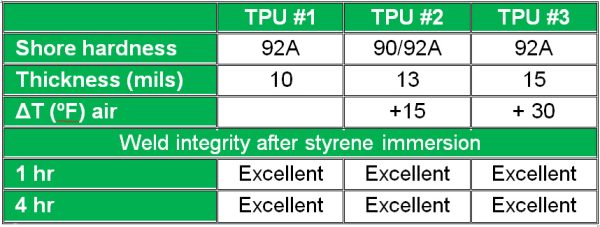
Hot air welding has proven effective and durable in the sealing of CIPP tubes using compatible seam tapes. This technique involves thermally welding the interface of the TPU/TPO seam tape and coating on sewn seam of the tube with a heated air flow. Hot air welds are permanent, airtight and come to full weld strength almost immediately. Determination of hot air temperature (typically +485oF), pressure and speed controls according to the film thickness and TPU/TPO thermal properties is important to ensure that the crystalline thermoplastic layers softens and melts to form a permanent weld when the thermoplastic cools. If excessive heat is applied, thermal degradation may occur where the thermoplastic sealing strip can shrink or burn while insufficient heat results in a defective weld due to poor fusion on the thermoplastic layers.

The weld characteristics of the thermoplastic TPU depends on the amount of crystallinity, where softer TPU tapes typically require less heat to thermally fuse. Table below indicates increase of temperature by 30 oF with increase of TPU shore hardness.

Data obtained using a MillerweldmasterT300 Flex hot air welding machine. Speed 10 FPM, 8 psi, 485 – 550 oF.

Solvent welding technique

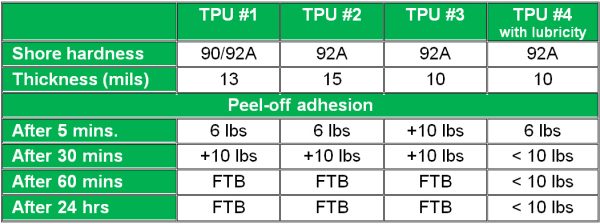
Solvent welding is a process where solventwith no dissolved polymer is applied to soften and dissolve the surface of the interfacing thermoplastic layers.This process forms a cohesive connection through molecular diffusion between the contacting layers. Tetrahydrofuran (THF) is used for solvent welding TPU due to its high solubility strength in creating a high-strength weld after a short time. The table below shows that TPU with higher shore A hardness tends to be more resistant and requires a longer reaction time than softer TPU’s. We also found that the presence of additives in TPU matrix can influence the strength of the solvent weld.

FTB – film tearing bond

The following criteria are important for high-quality solvent welding:

  • Compatible TPU matrix and shore hardness for effective solvation and allowing THF to permeate out to form a strong weld bond.
  • Suitable thickness of the seam tape – typically comparable to the liner coating.
  • Excellent lay flat quality and gauge consistency of the seam tape to avoid air pockets.
  • Skills and knowledge on the operator part is integral to obtain a consistent high-quality weld.

In practice, compatible thermoplastic TPU or TPO polymers is recommended for sealing the sewn seams in the final CIPP tube fabrication and careful determination of sealing process conditions according to the physicochemical properties of the seam tapes is required for superior weld strength and performance.


The Importance of CIPP and it’s Benefits

CIPP (Cured In Place Pipe) technology, also known as trenchless technology or in-situ pipe repair, enables the restoration of damaged sewer systems without the requirement for excavation or trench digging. This process involves deploying CIPP tubes using water, steam, or air pressure to line the existing pipes.


In our forthcoming four-part series, we will delve into various aspects of utilizing CIPP technology, with a focus on the following topics:

  • The Importance of CIPP and its Benefits.
  • Welding Techniques for CIPP and Implementation.
  • Ensuring Quality Control in CIPP Applications.
  • The Difference in Main Line CIPP and Laterals

The deteriorating state of wastewater systems in North America and Europe, along with the growing volume of wastewater worldwide, have resulted in the rise of pipes bursting and the overflow of wastewater outside of the pipe. The majority of pipes are buried underground, which may result in expensive repairs requiring excavating roadways and leading to major traffic delays for many days.

The concept of lining existing pipelines with a flexible material impregnated with resin was first explored in the 1950s. Early experiments focused on using fiberglass-reinforced materials as liners. The primary motivation was to find a less disruptive and more cost-effective method for rehabilitating aging sewer and water pipelines.

In the 21st century, CIPP technology continued to advance with improvements in liner materials, resin formulations, and installation techniques. It also found applications in rehabilitation projects for larger-diameter pipelines, stormwater systems, and other critical infrastructure. The technology’s versatility and ability to extend the life of pipelines made it a valuable asset for addressing the challenges of aging infrastructure.

Today, approximately 50% of all damaged pipes are being repaired using CIPP technology. In the U.S., trenchless technology continues an upward growth trend. It has captured nearly half of the $3.4 billion market for sewer line rehabilitation and about an eighth (12.9%) of the $1.5 billion spent on repairing potable water pipes, according to the 15th Annual Municipal Infrastructure Survey conducted by Underground Construction (Oildom Publishing Co., Houston, Texas).

Importance of CIPP and it's Benefits

Trenchless pipe relining is a popular technique for repairing damaged or clogged sewer lines, water lines where the pipes are pre-fabricated at the manufacturing facility and are pre cut and welded to form the tube, the liner goes through the wet-out process, where the line is saturated with a polyester, vinyl ester, or epoxy resin. The line is then transported using a refrigerated truck to the job site and is deployed at the job site utilizing steam, hot water or UV to form the shape of the damaged pipe, making it both more economical and effective.

The core principle behind CIPP involves inserting a flexible liner, often composed of materials like polyester, fiberglass, or felt, into the damaged or compromised pipe. Once in position, the liner is impregnated with a thermosetting resin that, upon curing, hardens to create a new, structurally sound pipe within the existing one. 

  1. CIPP typically consists of a resin-impregnated felt or fiber sleeve. With the resin in an uncured state, it forms a flexible, conformable tube that can be inserted into a damaged pipe. Some sleeves are manufactured inside out and are inverted as they are pushed into the existing pipe via air or water pressure.

importance-of-cipp-and-its-benefits

Cross Section of a damaged pipe (before), and after rehabilitation using CIPP (After) 1

The CIPP technology was developed as a solution to the challenges posed by traditional pipeline repair and replacement methods, which often involve disruptive and costly excavation. CIPP offers several benefits, including:

1. Cost Savings: CIPP eliminates or significantly reduces the need for extensive digging, resulting in reduced labor and equipment costs associated with excavation.

2. Minimal Disruption: The non-disruptive nature of CIPP means that road closures, traffic disturbances, and disruptions to daily activities are minimized, making it ideal for urban areas.

3. Environmental Considerations: CIPP reduces the environmental impact by minimizing soil disturbance, energy consumption, and emissions from construction equipment. It also extends the lifespan of existing infrastructure, reducing the need for new material production.

4. Versatility: CIPP can be used on various types of pipes, including those made of clay, concrete, cast iron, PVC, and more. This versatility makes it suitable for a wide range of pipeline rehabilitation projects.

5. Structural Reinforcement: The cured resin inside the liner not only seals leaks and prevents infiltration but also reinforces the structural integrity of the pipeline.

6. Speed of Implementation: CIPP projects are often completed faster than traditional methods due to reduced preparation and construction time, minimizing service interruptions.

E Squared has been working closely with all the major CIPP pipe manufacturers, along with the TPU vendors, felt and non-woven manufacturers across the world, and the leading manufacturers of welding and sewing machines, to ensure that we have the right solution for your application. Our Research and Development facility at Hillside, New Jersey, is working on new development projects, including high-pile knits, TPO coatings and hybrid fleece. E Squared’s dedication in the CIPP industry can be seen with the opening of our new manufacturing facility in Bluefield, VA which is dedicated to manufacturing coated felts for CIPP applications.

Mass Loaded Vinyl: The Ultimate Acoustic Barrier Solution

Mass loaded vinyl (MLV) has revolutionized the field of acoustic barriers by providing an efficient and versatile solution for noise reduction. From homeowners seeking peace and quiet to commercial establishments aiming to minimize noise pollution, with its exceptional sound-blocking performance, ease of installation, and durability, MLV offers a cost-effective way to create quieter and more peaceful spaces.

Mass loaded vinyl also known as Acoustic Barrier or Sound Deadening Barrier is a dense material comprising of two main parts, Polyvinyl Chloride (PVC) as the base compound giving the flexibility and mineral additivessuch as barium sulfate and calcium carbonate for increased mass. The added mass helps block and absorb sound waves by limiting their transmission, making it an efficient barrier against unwanted noise. With its flexible and thin composition, E Squared Sound SafeTMis reinforced with a high strength knit polyester fabric to give the additional strength and integrity to the Mass Loaded Vinylpractically eliminating sag when being hung and utilizing properly spaced grommets. Because E Squared SoundSafeTMis reinforced the grommets can effectively grip the reinforced for maximum strength.

MLV is safe to use as long as you follow the safety instructions and use it correctly. The barium sulfate or calcium carbonate used in MLV are inert and non-toxic. MLV can be used for soundproof ceilings, walls, floors, pipes, ducts, doors and windows on new constructions by sandwiching it between layers of drywall and the studs, but can also be used in existing walls using E Squared SoundSafeTM with Home Depot Double sided Industrial tape, the heavy-duty adhesive mounts easily and bonds to various clean surfaces such as wood, metal, concrete, vinyl, marble, tiles, bricks and plastic. The tape adhesive is engineered to resist curling, making the installation process fast, easy and mess-free. 

Applications of Mass Loaded Vinyl

  1. 1. Residential Use: Many homeowners face challenges such as noisy neighbors, traffic sounds, or mechanical equipment noise. Installing MLV in walls, ceilings, and floors effectively reduces noise transmission, creating a more peaceful living space. MLV can also be used to soundproof home studios, reducing sound leakage and enhancing audio recording quality.
  1. 2. Commercial Buildings: Offices, hotels, and hospitals often experience high noise levels, by installing MLV in partitions, floor/wall cavities, and suspended ceilings, these spaces can mitigate noise transfer and create a more comfortable environment for occupants.
  1. 3. Industrial Settings: Industrial facilities, such as factories and workshops, are notorious for generating loud machinery noises. Incorporating MLV in machinery enclosures, equipment housings, and even vehicles reduce noise transmission, creating safer and less disruptive work environments.
  1. 4. Noise Abatement: Sound barrier wall around fracking and drilling projects. Construction Noise Abatement to be fastened to scaffolding to keep noise below ordinance levels and allow for a longer working day for construction projects in city or densely populated areas.
image1
Mass Loaded Vinyl

5. Recreational: Attached to fencing to reduce noise created by pickle ball, tennis or other outdoor sports. 

At ESquared, we offer the SoundSafeTM Sustainable series which is made using 80% postindustrial scrap, making the product an ecofriendly and reducing the amount of  materials going into landfill. The SoundSafeTM Sustainable series is available in 1.0 lb/SF and 1.5 lb/SF, reinforced with polyester fabric.

  1. All our products are built with fire safety in mind, our most popular product, the SoundSafeTM Sustainable series, meets NFPA 701, Standard Methods of Fire Tests for Flame Propagation of Textiles and Films (Small Scale) and UL 94, the Standard for Safety of Flammability of Plastic Materials for Parts in Devices and Appliances testing, with a rating of V-0: burning stops within 10 seconds on a vertical specimen; drips of particles allowed as long as they are not inflamed.
  1. We also offer SoundSafeTM ULTRA, available in 1.0 lb/SF reinforced with polyester fabric, which is specially formulated to meet some of the most stringent Fire Testing used in the industry, we have tested our material against ASTM E 84, Standard Test Method for Surface Burning Characteristics of Building Materials which is found throughout the building code for various products, receiving a class A rating.This 10-min fire-test-response standard for the comparative surface burning behavior of building materials using a SteinerTunnel, is applicable to exposed surfaces such as walls and ceilings.  

image3

ASTM E84, UL 723 and NFPA 255 utilize the same equipment and test method. All three are essentially the same test and are often referred to interchangeably by the building code.

CAN/ULC S102, Surface Burning Characteristics of Building Materials and Assemblies was developed by UL and Standard Council Canada, the National Building Code of Canada and provincial codes utilizes the same equipment as ASTM E 84 with a slightly different set-up and test method to evaluate building materials for use in Canada, reports Flame Spread (FS) and Smoke Development (SD) values for the specific product or assembly evaluate and is tested three times. 

The Sound Transmission Class (or STC) rating on a building partition indicates how well airborne sound is attenuated. It is frequently used in the US to grade interior wall arrangements as well as exterior wall configurations, flooring, doors, and windows. The STC rating fairly approximates the noise reduction in decibels that a partition can offer.

E Squared SoundSafeTM is a cost-effective and versatile solution for noise reduction in residential and commercial buildings. It has a high sound transmission class (STC) rating helping reduce unwanted sound. MLV can also be combined with other soundproofing materials such as acoustic foam panels, sound caulking or barrier tape to enhance its performance15.

In the chart below, we can see the Noise Transmission loss in decibels(dB) of E Squared Sound SafeTM materials and the corresponding STC rating.

The Ultimate Acoustic Barrier Solution
graph1

Whether it’s reducing noise pollution in homes, offices, or industrial settings, E Squared SoundSafeTM mass loaded vinyl is a highly effective tool for controlling unwanted sound transmission. By employing the benefits of MLV, individuals and organizations can enjoy the comforts of tranquility while minimizing the impact of noise pollution on their daily lives.

Manufacturing in the USA 

From the Desk of Our President:

I was raised in the textile manufacturing industry in the United States, with only one friend outside of work involved in a similar field. The majority of my non work relationships work in a wide variety of professions mainly though in finance. I take immense pride in my work and relish any opportunity to discuss it with interested listeners. Whenever I reveal my occupation to new acquaintances, they’re invariably surprised. It’s not just that I’m in manufacturing, but specifically, textiles. Many are astounded that textile production still exists in America, yet it does. I can count numerous amiable and not-so-amiable competitors in the same line of work.

One may wonder how a textile manufacturer competes in the USA. Our success hinges on multiple factors. Our people, our products
Most importantly, the USA is a global leader in oil, and consequently in refining petrochemicals, the foundation of plastic production. This ensures not just stable, but also cost-effective pricing for plastics in America. This domestic production plays a significant role in establishing our nation’s global standing.

Our Team at RMA and E Squared is a diversified group of individuals from all over the world. People sometimes forget that we are still a melting pot of the world. This diversity is what helps us thrive and allows us to address problems in different ways and perspectives. Our production and technical team consists of people from Venezuela, Dominican Republic, Turkey, India and Malaysia.

A key for us in manufacturing our textiles in the USA is to stay diverse not only in personnel but in the products we produce. At our factory in Hillside NJ, we produce products that run the gamut of uses from Roofing to Sewer rehabilitation, reservoir liners to safety tarps for utility companies. This ability span so many industries keeps us moving along. We rarely say no to development projects. We love the challenges that are brought to us everyday, they help us push the limits.

The largest expense in our manufacturing process is raw materials and the logistics involved in their transportation. Direct labor costs are comparatively lower as an overall cost. We source most of the polymers we use locally, transported directly to us in bulk by truck or railcar. Interestingly, the knit and woven fabrics we coat usually make up a small percentage of our overall raw material costs. The polymers we use for coating constitute the bulk of our costs. So come to think of it, maybe I should consider ourselves in the polymer processing business.

Our competitive edge within the USA also stems from lower transportation costs compared to other countries, largely due to more affordable fuel prices. Electricity costs are also lower, helping keep our marginal power costs down in comparison to our European competitors.

Despite complaints about our aging infrastructure in the USA, it remains remarkably reliable. Power outages are seldom an issue, except for isolated incidents in certain regions. In contrast, power disruptions are a frequent occurrence in many countries like South Africa and many countries in Latin America. When you couple that with reasonable and stable power costs, US manufacturing when compared to other countries looks pretty good.

There are also substantial barriers to entry in many of our product lines. Consider, for instance, our largest market, commercial roofing membranes. Establishing a PVC roofing production plant requires considerable capital and specialized knowledge. Furthermore, the extensive time and independent testing certifications needed present additional challenges. Add to these the inefficiently run certifying groups, and the entry barriers become even more formidable. Once past these, you still need trained personnel to install your systems domestically on job sites. This is where labor becomes a significant part of the cost, and it’s one expense that can’t be outsourced.

As much as I hate to say it, the US government has changed its tune about manufacturing domestically. There are many initiatives at both the federal and state level to support us manufacturing. The Berry Amendment and Buy America regulations for both military and infrastructure projects are a help in what we are doing. The state of NJ is even offering grants for manufacturers today for companies to invest in new technology.

Finally, innovation is key to our survival and growth. We are always seeking new production methods, exploring different applications, and inventing novel solutions. This approach keeps us engaged and energized. No two days are the same, and there is always a new challenge to tackle, which is why I love manufacturing in the USA.

E Squared FlexLiner FG: The Ideal Fish Grade Pond Liner for a Thriving Aquatic Environment

A crucial component of any pond or water garden project is a reliable pond liner. Its primary purpose is to not only hold the water within the pond but also provide a safe and supportive environment for fish and plant life. Among the numerous options available in the market, E Squared FlexLiner FGTM stands out as an exceptional choice offering a unique combination of physical performance, buried soil resistance, and fish-friendly characteristics, making it an ideal solution for creating a thriving aquatic ecosystem.

  1. A Fish Grade Pond Liner Built for Excellence:

E Squared FlexLiner FGTM is a fish grade geomembrane designed to meet the highest standards of performance. Constructed with the proven strength and durability of standard reinforced Flexliner LLDPE-R, this pond liner offers superior toughness, high tensile strength, and puncture resistance, ensuring its longevity and reliability.

  1. Safety for Aquatic Life:

One of the key concerns when choosing a pond liner is its impact on fish and plant life. While some liners may pose risks due to plasticizer leaching, E Squared FlexLiner FGTM is formulated with special additives that are considered safe for fish (fish grade). These measures eliminate the need to compromise on the well-being of aquatic inhabitants while maintaining an affordable price point.

  1. Polyethylene: A Safe and Versatile Choice:

Polyethylene materials have proven to be fish and plant safe, without leaching harmful chemicals into the water. This, combined with its excellent chemical resistance and wide temperature range, makes polyethylene an ideal material for pond liners. However, it is essential to be cautious with general LLDPE-R liners that may have modifications with additives or coatings, potentially compromising their fish grade properties. E Squared FlexLiner FGTM stands out as a meticulously formulated liner, designed to support aquatic life while maintaining all the advantages of polyethylene.

  1. Certified Non-Toxic:

E Squared FlexLiner FGTM has undergone rigorous testing, including static acute toxicity tests with Vibrio fischeri, Pimephales promelas, and Daphnia magna. These tests have certified the liner to be nontoxic, ensuring the safety of the aquatic ecosystem it nurtures.

  1. Longevity and Reliability:

Reinforced with a 9×9 polyester scrim and an advanced UV and Antioxidants package, E Squared FlexLiner FGTM boasts exceptional Strength and UV resistance. When covered with earth, rock, or water (non-exposed), it can exceed a life expectancy of 40 years, providing peace of mind and lasting value for any pond or water garden project.

  1. Ease of Installation:

Compared to other options like HDPE, E Squared FlexLiner FGTM offers superior flexibility. It can effortlessly conform to the terrain, making installation more straightforward, especially around corners. Additionally, it is well-suited for custom prefabrication in a controlled factory environment, reducing the need for extensive field welds and saving precious installation time.

  1. Proudly Made in the U.S.A:

All E Squared FlexLiner FGTM products are proudly manufactured in the U.S.A at our facility in Hillside, New Jersey. This ensures the highest level of quality control and supports local industries.

E Squared also offers a PVC alternative for Fish Pond Liners, which is also suitable for potable water applications, E1100F is also reinforced with a Polyester fabric giving it the mechanical strength and stability as the Flexliner FGTM.

For any pond or water garden project aiming for a flourishing aquatic environment, E Squared FlexLiner FGTM is the perfect choice. With its fish grade design, exceptional durability, ease of installation, and long-lasting performance, this advanced pond liner delivers unparalleled value. Safeguard your aquatic ecosystem with E Squared FlexLiner FGTM and witness the beauty and vitality it brings to your waterscape. Aquaponic, Hydroponic, and Aquaculture safe – a true testament to its versatility and environmental compatibility.

Geomembranes for Beginners

Geomembranes are low-permeability synthetic membrane liners or barriers formed into sheets used as a barrier to control or mitigate fluid and gas migration into the soil. Common applications of geomembranes include landfills, pond liners, dams, erosion control, sediment control, landfill liners, landfill covers, mining industry among other applications providing a barrier between the environment and possible contaminants.

Geomembranes are part of the larger family called Geosynthetics, if you break it down, geo means earth or soil, whereas synthetic is man made. Geosynthetics are defined as “planar, polymeric (synthetic or natural) material used in contact with soil/rock and/or any other geotechnical material for filtration, drainage, separation, reinforcement, protection, sealing, and packing.” [1] Geosynthetics have two major classifications, permeable membranes such as geotextiles, geogrids and geocells and impermeable membranes such as geomembranes and geosynthetic clays (GCL). 

Geomembranes may be reinforced with fabrics or they may be non-reinforced films, they could vary in thickness between 20-60 mil, but essentially needs to have certain properties like low -permeability, low gas and water vapor transmission rate, chemical resistant, puncture resistant and have good weatherability. Unreinforced geomembranes are cost-effective and relatively easy to install; they provide excellent chemical and UV resistance, and are typically used in less demanding applications such as secondary containment liners for spills and leaks, covers for wastewater treatment facilities, and decorative water features. They are also used in lining systems for temporary or short-term projects, such as temporary storage ponds or construction sites. 

Reinforced geomembranes offer excellent durable performance and are cost-effective, making them an ideal choice for a wide range of civil and environmental engineering applications. The reinforcing layer of geotextile fabric helps to distribute and resist any loading on the liner surface, increasing the compressive and tensile strength of the liner. This makes reinforced geomembranes highly suitable for use in environments where substrates are uneven or settlement-prone.

To meet the above requirements, Geomembranes are commonly made from polymers such as PVC, EIA, HDPE, LLDPE-R and others via manufacturing methods known as extrusion, calendaring, or spread coating. Understanding the properties of the polymers used to create a geomembrane is necessary for its designs and specifications to meet the project requirements. For instance, the degree of flexibility of the polymers can change greatly from one to another affecting the installation process, the service life of the geomembrane can be greatly improved by adding antioxidants, carbon black and other UV packages to help with weatherability.  Geomembranes that are formulated for exposed applications have a typical service life of 30 years, but there are many examples where they are in operation for beyond 30 years with little to no loss in its physical properties. 

Many geomembranes are specifically designed for buried applications, where they are protected from the elements like UV degradation, freezing, wind uplift and damage from animal or humans’ intrusion thus extending its service life to well beyond 100 years. Also, a thicker material also extends the anticipated service life. 

The most common polymeric geomembranes are HDPE, LLDPE-R and PVC, with EIA geomembranes (which is an alloy of PVC resin with high molecular weight ketone ethylene ester (KEE) solid plasticizer) gaining popularity because of its versatile nature. 

Geomembranes serve as a crucial tool for containment purposes. They find extensive application in various industries such as agriculture, energy, mining, and construction. In agriculture, geomembranes are utilized to line silos, while in other sectors, they play a vital role in managing industrial water and waste. Moreover, geomembranes are employed as versatile solutions like portable water tanks and liners for ponds, fish ponds, canals, and dams. In the construction domain, PVC and EIA geomembranes are particularly popular for constructing canals, landfills, soil remediation sites, wastewater lagoon liners, and tank linings. EIA geomembranes also serve as protectors for Expanded Polystyrene (EPS) wraps used in road construction on roads and highways. Regardless of the application, the primary objectives of geomembranes are to ensure containment of liquids, solids, or gas contaminants, prevent erosion, leakage, and protect against harmful UV rays and other natural elements

At E Squared, we produce geomembranes in both smooth and textured finish, with or without reinforcements and varying colors for a wide variety of buried and exposed applications. Below is a list of our products available:

Geomembrane Type

Abbreviation

Polymer Type

Typical Properties

High density Polyethylene

HDPE

Thermoplastic

  • High UV resistance
  • High Chemical Resistance
  • Susceptible to stress cracking
  • Difficult to Install
  • Unsupported only

Linear Low-density polyethylene

LLDPE-R

Thermoplastic

  • Good UV resistance
  • Good Chemical Resistance
  • More flexible to HDPE
  • Excellent elongation properties
  • Reinforced and unsupported

Polyvinyl Chloride

PVC

Thermoplastic

  • Good flexibility at all temperatures
  • Good Chemical Resistance
  • Tear, puncture, and abrasion-resistant
  • Can be prefabricated at separate location
  • Susceptible to plasticizer loss
  • Can be made UV stable
    • Reinforced and unsupported

Ethylene Interpolymer Alloy

EIA

Thermoplastic

  • Good flexibility at all temperatures
  • High Chemical Resistance
  • Tear, puncture, and abrasion-resistant
  • Can be prefabricated at separate location
  • Not susceptible to plasticizer loss
  • Can be made UV stable
    • Reinforced and unsupported
NON HDPE
polypropylene
pvc2
pvc1
reinforced

Storing Geomembranes on a Job Site

Geomembranes are very versatile materials made to withstand extreme temperatures, punctures, stress resistance, and exposure to various elements. In spite of this, it is nevertheless essential to store the materials properly on site before installation to protect them from damage and degradation and maintain their optimum performance.

Some of the key points to remember when storing geomembranes are:

  • Storing the geomembranes away from sunlight to prevent degradation by heat and UV.
  • Geomembranes should be stored on prepared surfaces to prevent punctures.
  • Geomembrane rolls should be stored on a level surface, the storage area should be dry with a firm base
  • Over-stacking rolls could cause damage to the lay-flat properties.
  • Geomembrane needs to be shielded against extreme heat, cold, cutting, piercing, and other damaging circumstances.
  • Prevention of vandalism and theft is another crucial factor to consider while storing geomembranes at a location.
  • When welding together geomembrane panels, the panels should have the same temperature to prevent wrinkling
  • Care should be exercised to avoid damage to the geomembrane during transportation, using a front-end loader or other appropriate tool equipped with the required slings should be used on a worksite

Figure: Storage of geomembrane rolls on top of geotextile to prevent damage from underlying material (note the use of nylon slings for lifting). [1]

It is essential to properly store the geomembrane and prepare the installation site for installation so that we can ensure the material will be effective, free of damage, and meets the manufactures specifications. Some of the common recommendations would be:


Natural Factors

Several natural factors can cause geosynthetics to degrade. PVC and EIA geomembranes are formulated to work primarily as a buried application therefore might not have very good UV resistance, therefore storing them under direct sunlight may affect the quality of the product and may affect its long-term effectiveness. Geomembranes must also be stored in a dry environment prior to installation in order to prevent early hydration. Also, we need to consider the stacking of multiple rolls on top of each other for long durations, as the rolls are extremely heavy, and a combination of high heat and pressure would lead to premature degradation of the membranes, also multiple stacking could be unsafe and challenging for site employees to handle.


Temperature Effect

Extreme heat and cold are additional possible hazards to pre-installed geomembranes and seaming materials. Geomembranes are not built for extreme temperature swings and could have catastrophic failures if exposed to very high or low temperatures. At low temperatures, if the PVC or EIA membranes are not secured and protected with soil or water could lead to cracking. Extreme temperatures can also lead to the breakdown and loss of strength qualities in materials like Polyethylene and PVC membranes. Adhesives, primers, and tapes, which are commonly used in geomembrane seaming, are particularly vulnerable to extreme temperature changes. They should be kept in temperature-controlled storage until usage for the best results.


Other storage factors to consider

Geomembrane rolls should be stored on a level surface and it’s important to consider how the site’s climate may affect the rolls’ temperature before they’re ever unrolled. As the liner sits outside, thermal elongation takes place as a result of heat buildup from UV exposure or generally rising temperatures at the construction site. Thermal elongation is a reversible effect and can be controlled. When welding together geomembrane panels, the panels should have the same temperature to avoid wrinkling.

When possible, have materials offloaded in the location they will be stored until deployment and transport the geomembranes to the project site using the most direct method. This can lessen handling and the possibility of damage from other environmental conditions. Additionally, keeping the material near the job site reduces additional handling and the case of damage from heavy machinery.

Keeping the material dry and debris free is very important, if not welding would be a challenge and meeting the seam peel and seam strength requirements would not be possible leading to additional resources required to clean and dry the product, Fabricated panels, when possible, should be stored on pallets off the ground. The storage area should be dry with a firm base.

For additional questions regarding storage and fabrications please contact our technical team.


Reference

[1] September 2018, “Reclamation Managing Water in the West: Design Standards No. 13 Embankment Dams Chapter 20: Geomembranes Phase 4 (Final), U.S Department of the Interior Bureau of Reclamation

[2] Pfaller, M. (2020, October 9). Material storage – it matters! ICS – INTERNATIONAL COVER SYSTEMS. Retrieved January 19, 2023, from https://internationalcoversystems.com/blog/geosynthetic-material-storage-matters/

[3] ASTM Standard D7865-13(2021), “Standard Guide for Identification, Packaging, Handling, Storage, and Deployment of Fabricated Geomembrane Panels”, ASTM International, West Conshohocken, PA, 2003, DOI: 0.1520/D7865-13R21, www.astm.org

[4] Ait, M. (2021, June 24). Geomembrane Explained. Industrial Plastics. https://industrialplastics.com.au/geomembrane-explained/

[5] Kelsey, C. (2020, October 15). Best Practices for Minimizing Geomembrane Wrinkling. Geosynthetica. https://www.geosynthetica.com/minimizing-geomembrane-wrinkling-tarnowski/

[6] 2021, August 12, “Guideline for Desert Installation of Fabricated Geomembrane Panels Fabricated Geomembrane Institute”, Fabricated Geomembrane Institute